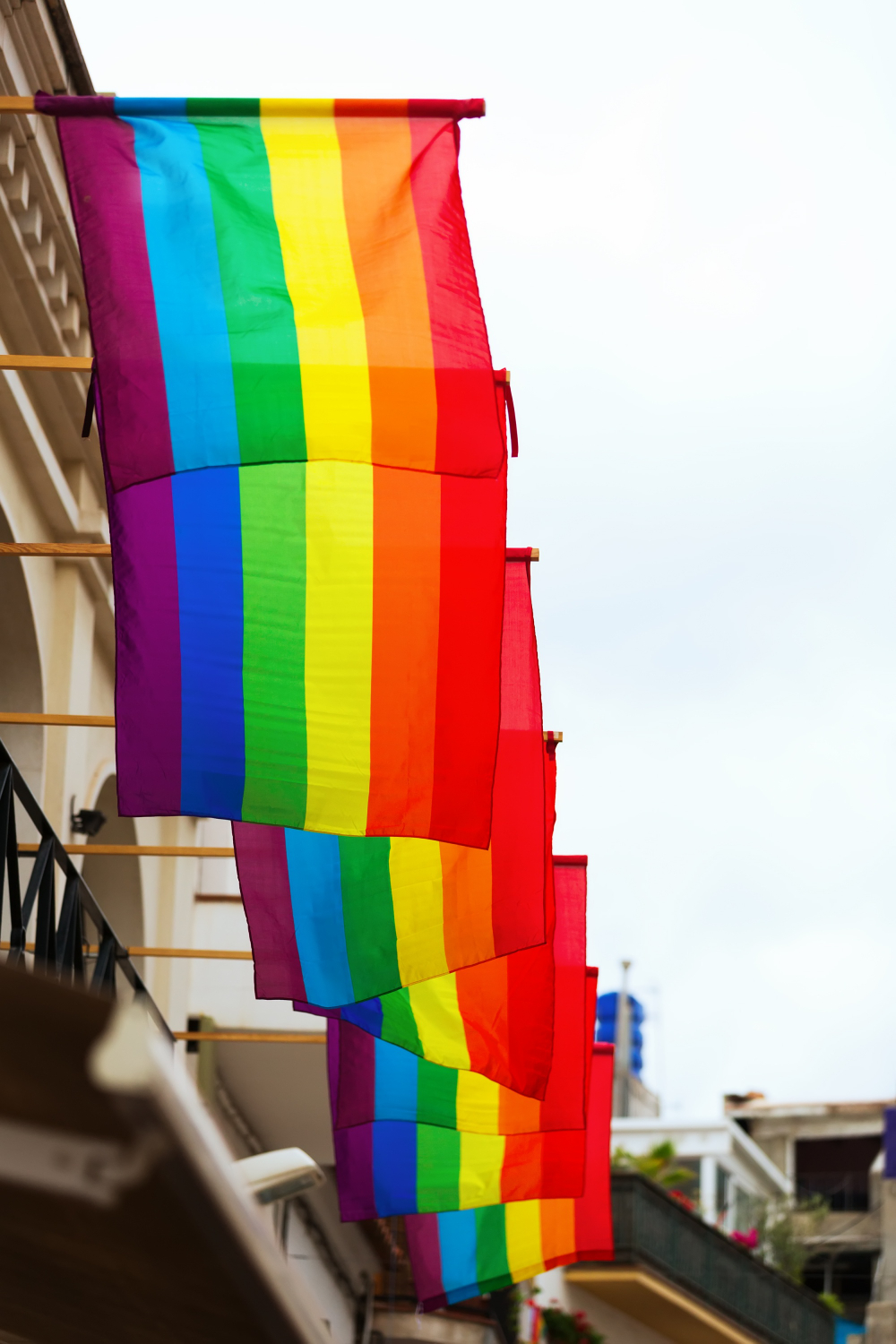
Seattle had planned its Pride Match long before it knew who would be playing in it. When the local organising committee designated the June 26 Group G fixture at Lumen Field as part of Pride Weekend celebrations, the World Cup draw hadn’t happened yet. The idea was straightforward: the match fell on the opening night of Seattle’s annual Pride weekend, so the city would celebrate both at once — rainbow flags, street parties, art competitions, the works.
Then the draw happened. The teams were Egypt and Iran.
In Iran, homosexuality is illegal and punishable by the death penalty. In Egypt, while homosexuality is not explicitly outlawed, LGBTQ+ people can be prosecuted under public decency laws. What had been a simple civic celebration became, overnight, one of the most politically loaded fixtures of the 2026 World Cup — a collision between two countries with some of the world’s most restrictive LGBTQ+ laws and a host city that has organised its Pride festival since 2007 and was not about to stop now.
The match ended 1-1. Almost everything else that happened in Seattle that night was more complicated.
Seattle World Cup: How It Got Here
Seattle’s local organising committee, SeattleFWC26, had designated the June 26 match as the city’s official “Pride Match” in advance, citing football’s “unique power to unite people across borders, cultures, and beliefs.” Hana Tadesse, vice president of communications for SeattleFWC26, told reporters the Pacific Northwest is home to one of the nation’s largest Iranian-American communities, a thriving Egyptian diaspora, and rich communities representing all nations Seattle was hosting — and that the committee was committed to ensuring all residents and visitors experience “the warmth, respect, and dignity that defines our region.”
The two football federations saw it differently. Iranian Football Federation President Mehdi Taj condemned the move as “unreasonable conduct that supports a specific group,” with both Tehran and Cairo formally communicating their objections to FIFA. The Egyptian Football Association issued a statement categorically rejecting “any activities related to supporting homosexuality during the match,” saying such initiatives “conflict with the cultural, religious and social values in the region, especially in Arab and Islamic societies.”
FIFA’s response drew an immediate comparison to 2022. At the Qatar World Cup, FIFA had fiercely defended the right of the host nation’s cultural norms to be respected — including restricting rainbow armbands in a move that drew widespread criticism from European teams and human rights organisations. Four years later, in Seattle, FIFA held a different line. “The FIFA World Cup 2026 is an inclusive event that welcomes people from all backgrounds,” a FIFA spokesperson said, confirming that rainbow flags were permitted inside Lumen Field under the Stadium Code of Conduct. FIFA president Gianni Infantino did attempt a careful semantic distinction — telling German publication Die Weltwoche that “there will be no ‘Pride Match’ at the FIFA World Cup; there will be a FIFA World Cup match in Seattle, and on the same day, events organised by external organisations will be taking place in the city” — but the distinction landed with limited credibility given that FIFA’s own stadiums were displaying the flags its statement explicitly permitted.
Iran pushed further, attempting to have its matches relocated out of the United States entirely, a request FIFA rejected.
At the pre-match press conference, a FIFA official had to inform the media that the Iran national team was “only willing to answer questions in relation to the game” before coach Amir Ghalenoei spoke. “I said we are here to play football. For nothing else,” he said.
What It Looked Like Inside Lumen Field for the World Cup
The scene outside and inside Lumen Field on June 26 defied simple characterisation. In the stands, an intoxicating mix of fans in black hijabs, rainbow scarves, golden Tutankhamun headgear, and team jerseys sat side by side in front of 66,925 screaming, chanting, and cheering supporters.
Walking the concourses at Lumen, the Pride branding was largely drowned out by a sea of Egyptian and Iranian flags. Most Iranian supporters waved the pre-1979 Sun and Lion flag associated with the opposition movement rather than the Islamic Republic’s official flag. The political layering inside a single stadium was dense: One Pride supporter told reporters that their presence was as much about supporting the Iranian people and the protest movement as it was about celebrating Pride. “The chants you hear from people with the megaphones today are the same chants protesters wanted the rest of the world to hear,” they said, referring to the Voice of Iran organisation present at the match.
Palestinian flags waved next to rainbow banners. A scattering of boos greeted the Iranian national anthem, drowned out by boisterous cheering when it finished. The Pride supporter in a “Gay of Hormuz” shirt put the reciprocity argument plainly: “People respected the local rules in Qatar, whether that meant no Pride flags or no drinking in the stadiums. The same should apply here.”
One of the few moments of genuine negativity came and went quickly. The rest of the night, the Cascadia Daily News reported, almost everyone got along — and by early Saturday morning, the bars in Pioneer Square were filled with Egyptian fans singing and dancing to Arabic music, celebrating Egypt reaching the knockout stage of the World Cup for the first time in the country’s history.
The Larger Argument the World Cup Match Exposed
The Pride Match is worth examining beyond the spectacle because the argument it staged — about whose values set the terms at a global sporting event held in a liberal Western city — is not going away.
FIFA’s double standard between Qatar 2022 and Seattle 2026 is the starkest entry point. In Qatar, the host nation’s prohibition on rainbow symbols was effectively upheld: European captains who planned to wear OneLove armbands stood down after FIFA threatened sporting sanctions, and several federations that had promised to push back fell quiet. In Seattle, the host city’s Pride designation was upheld instead, and FIFA explicitly confirmed fans could bring rainbow flags inside. The consistent element across both tournaments is not a principle — it is deference to the host’s position, whichever direction that points.
The second argument is about what happens when the most-watched global sporting event lands in a city with a strong local identity and asks that identity to subordinate itself to a kind of cultural neutrality that the event itself does not actually practise. SeattleFWC26 made a local civic decision — long before the draw — that a match on Pride Weekend would be part of Pride Weekend. That is not substantively different from a host city planning a cultural festival around any other scheduled event. The controversy arose not from Seattle’s decision but from the draw’s outcome, which was nobody’s design and nobody’s fault.
The third argument concerns the players themselves. As football journalist Grant Wahl observed, asking Egyptian or Iranian players to comment on the Pride Match put them in an unfair position, given the oppressive regimes they come from — “whether they are for or against gay rights in general doesn’t matter, because they have to think about what it means to say anything at all.” The Iran team’s blanket pre-match press conference embargo was a rational response to an impossible situation, not evidence of bad faith.
What Stays After the Final Whistle
The Egypt-Iran match set a MENA television audience record for a FIFA World Cup fixture — a detail that puts the scale of the cultural moment in context. Hundreds of millions of viewers across the Middle East and North Africa watched a match that was simultaneously a decisive Group G decider and a live broadcast of Seattle’s Pride weekend. What they made of what they saw will vary enormously by viewer, by country, and by what they were actually watching for.
The match itself produced a result that sent Egypt through to the round of 32 for the first time in their history — a sporting achievement that, in almost any other context, would have been the only story. In Seattle on June 26, 2026, it was a footnote to something larger: a night when football, pride politics, diaspora identity, protest movements, and cultural sovereignty collided in a single stadium and somehow produced, by most accounts, more unity than division.
The questions the night raised — about FIFA’s consistency, about a host city’s right to express its values, about the impossible positions international footballers are placed in by political circumstances beyond their control — will still be unresolved when the tournament ends. They will simply move to the next host city that discovers its World Cup match falls on a culturally significant local date, with teams neither side would have predicted.
More Deep Dives: The FAA’s Air Traffic Crisis: What It Means for the Future of Flying
Sources: Wikipedia, 2026 FIFA World Cup Group G; ESPN; Sky Sports; CNN Sports; OutKick / Fox News; Cascadia Daily News; KOMO News; Iran International; Ahram Online.