Every story about the AI buildout eventually becomes a story about power. Gartner estimates global data center electricity demand will exceed 1,000 TWh by 2026 — more than the entire consumption of Japan — and modern AI facilities now demand between 100 and 750 megawatts per site, driven primarily by inference workloads and high-density GPU clusters. The same is true for electric vehicles, where battery packs and onboard chargers now operate at voltages and currents that would have been exotic a decade ago, and for renewable energy, where grid-scale storage has to absorb and release power on demand with split-second precision.
What rarely makes the headlines is the equipment used to prove any of this actually works before it ships. Before a GPU server rack gets bolted into a data center, before an EV battery pack gets certified, before a solar inverter gets connected to the grid, engineers have to simulate the real-world electrical stress those systems will face — under controlled, repeatable, laboratory conditions. The instrument that does this is called an electronic load, and the businesses building them are having a quietly extraordinary few years.
The Job Nobody Notices
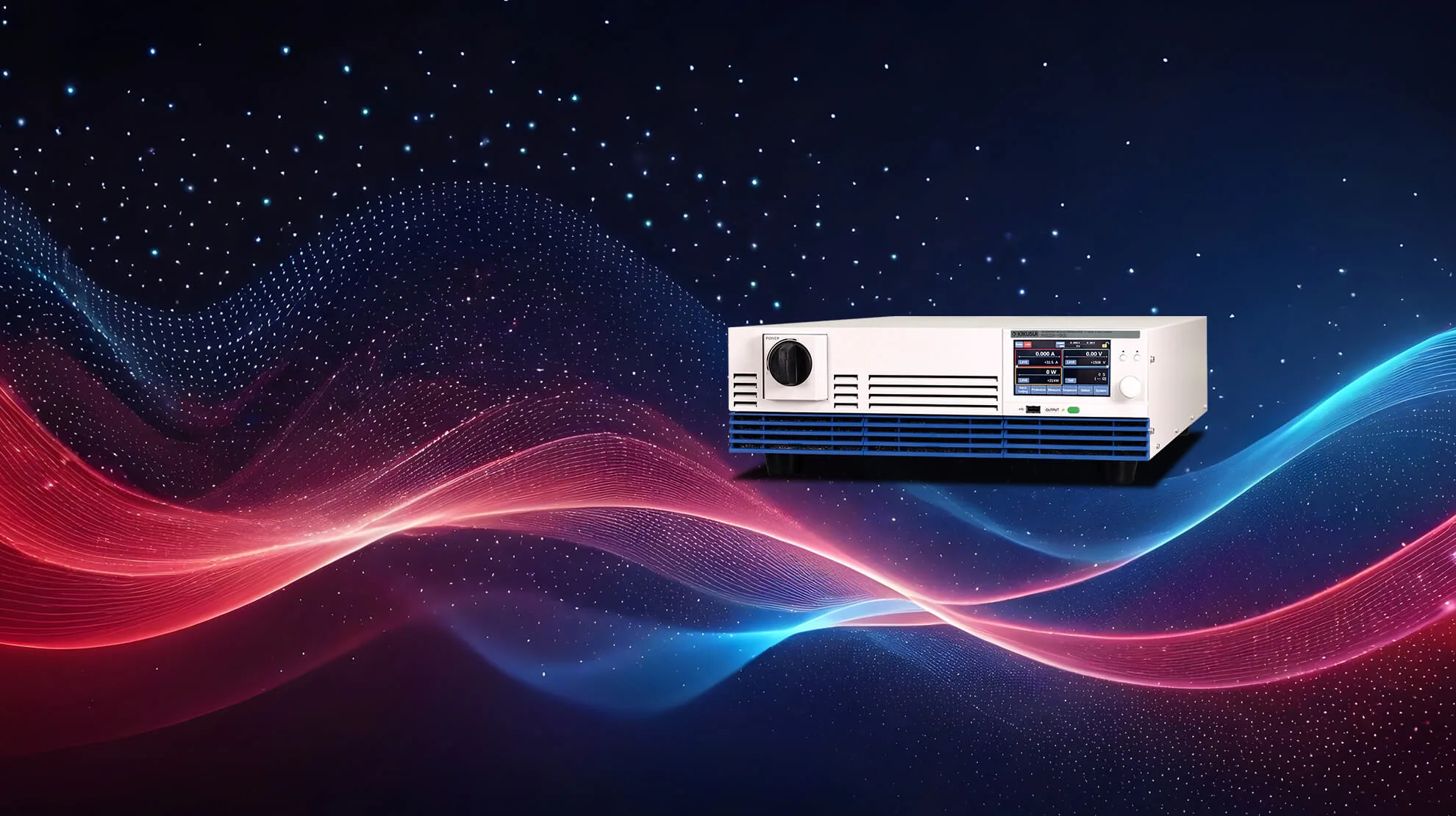
A power supply pushes energy into a system. An electronic load does the opposite: it absorbs energy, acting as a programmable stand-in for whatever real-world device will eventually draw power from that system — a motor, a battery charger, a server rack, a string of solar panels. Engineers need this because validating a power source by hooking it up to the actual end product is slow, expensive, and often dangerous. A regulated electronic load lets a test engineer dial in exact current, voltage, and power conditions, and hold them steady even as the device under test behaves unpredictably — something a simple resistor bank can’t do.
The technical sophistication required has grown sharply alongside the systems being tested. Modern electronic loads support multiple operating modes — constant current for battery discharge testing, constant voltage to simulate a battery while testing a charger, constant resistance to mimic the startup behavior of passive loads, constant power to stress-test DC-DC converters, and arbitrary current-voltage profiles to replicate nonlinear devices like LED arrays or solar cells under partial shading. High-end instruments can now operate down to a fraction of a volt for fuel cell and single-cell battery testing, and the most advanced regenerative architectures recycle the absorbed energy back to the grid at roughly 90% efficiency rather than burning it off as waste heat — a meaningful operating cost difference when a test lab is running 24-hour battery cycling and burn-in tests around the clock.
Three Industries, One Bottleneck
The reason this category of equipment has quietly become strategically important is that it sits underneath three of the fastest-growing infrastructure buildouts in the world economy.
Electric vehicles are the most mature driver. On-board chargers, traction inverters, and high-voltage battery packs all require electronic loads capable of handling hundreds of kilowatts at up to 1,500 volts to validate performance before a vehicle platform reaches production. EV drive-cycle simulation — replicating the acceleration, cruising, and braking pattern of a real commute — is now a standard part of battery validation, and it requires load equipment with the dynamic response speed to track those transitions in real time.
AI data center infrastructure is the newest and fastest-growing driver. NVIDIA’s Blackwell GPU racks already draw upward of 132 kW, and future Blackwell Ultra and Rubin AI server designs are expected to require between 250 and 900 kW per rack by 2026-2027, with the most extreme configurations projected to break the 1-megawatt barrier by 2028. Every power supply, voltage regulator, and battery backup system feeding those racks has to be validated under load conditions that mimic the violent, parallelized power draw of a GPU cluster — a profile that looks nothing like the steady draw of legacy enterprise servers. Every AI server rack demands sophisticated power delivery components — voltage regulators, power converters, gate drivers, and current sensors — and a shortage in power IC supply is expected to persist through 2026 and beyond as data center demand outpaces fabrication capacity that was built for more cautious growth assumptions.
Renewable energy and grid storage round out the trio. Battery energy storage systems built around lithium ferrophosphate chemistry, spanning from 200 kWh to 2 megawatt-hours of capacity, are increasingly deployed to harvest power during off-peak hours and discharge it during demand spikes, transitioning from standby to full output in milliseconds. Every one of those systems has to be validated for its charge and discharge behavior, its response time, and its ability to stabilize voltage and frequency under real grid conditions — work that depends on the same class of programmable load equipment used in EV and AI testing.
Why the Same Instrument Works Across All Three
What makes this an interesting infrastructure story rather than three separate ones is that the underlying engineering challenge is identical: simulate a complex, dynamic electrical load with enough precision and speed that a test result can be trusted. A handful of specialized manufacturers — Japan’s Kikusui Electronics, prominent among them — have spent decades building instrument families that scale from benchtop research and development work up to industrial-scale validation, with parallel-operation architectures that let dozens of units combine into a single high-power test system rated in the hundreds of kilowatts.
Kikusui’s own technical literature on the category — laid out in detail in the company’s DC electronic load buying guide — illustrates how specialized this equipment has become. Regenerative load architectures capable of handling 20 kilowatts in a compact 3U rack unit, with as many as 25 units operable in parallel to reach 500 kilowatts of combined capacity, are now positioned explicitly for “battery cycling, aging and burn-in tests, and high-power inverter testing where operating cost reduction is critical” — language that reads less like a product spec sheet and more like a direct response to how expensive and power-hungry modern test labs have become.
The Infrastructure Behind the Infrastructure
None of this shows up in earnings calls about AI capital expenditure or EV sales figures. The five largest AI infrastructure spenders are projected to commit more than $600 billion in capital expenditure in 2026 alone, with roughly $450 billion of that directed at AI infrastructure specifically, and not a meaningful fraction of that figure is publicly attributed to test and validation equipment. But every gigawatt of new AI data center capacity, every new EV battery platform, and every grid-scale storage deployment passes through a test lab using equipment in this category before it goes live.
That makes electronic loads a useful, if unglamorous, leading indicator. With inference now accounting for roughly 80 to 90% of total AI computing load, and infrastructure increasingly required to sustain constant high-wattage draw rather than just brief peak capacity, the validation requirements placed on power delivery hardware are only getting more demanding — not less. The same dynamic is playing out in EV powertrains, where voltage platforms have climbed from 400V to 800V and beyond, and in grid storage, where utilities are deploying battery systems specifically because renewables are projected to grow generation 22% annually through 2030, meeting nearly half of the anticipated growth in global data center electricity demand.
The companies that make this equipment rarely appear in mainstream coverage of the AI boom, the EV transition, or the renewable energy buildout. But the next time a headline announces a new gigawatt-scale data center or a record EV battery range, somewhere behind that announcement sits a test lab full of equipment doing the unglamorous work of proving the claim is true before the public ever sees it.
Sources: Kikusui America DC Electronic Load Guide; Gartner data center electricity demand estimates (2026); International Energy Agency Energy and AI Report (2025); Cummins Inc. AI data center power infrastructure analysis; Accuris Supply Chain Intelligence; Tech Plus Trends AI Data Center Power Requirements Guide (2026); Carbon Credits AI infrastructure spending analysis; Data Center Knowledge 2026 predictions.