The electric vehicle sitting in your driveway, the grid-scale battery bank storing solar energy on the outskirts of your city, the smartphone in your pocket — all of them depend on a supply chain that runs through a handful of salt flats in South America and a concentrated cluster of refineries in China. The clean energy transition has been sold as a liberation from fossil fuel geopolitics. What it has actually delivered, so far, is a different kind of dependency.
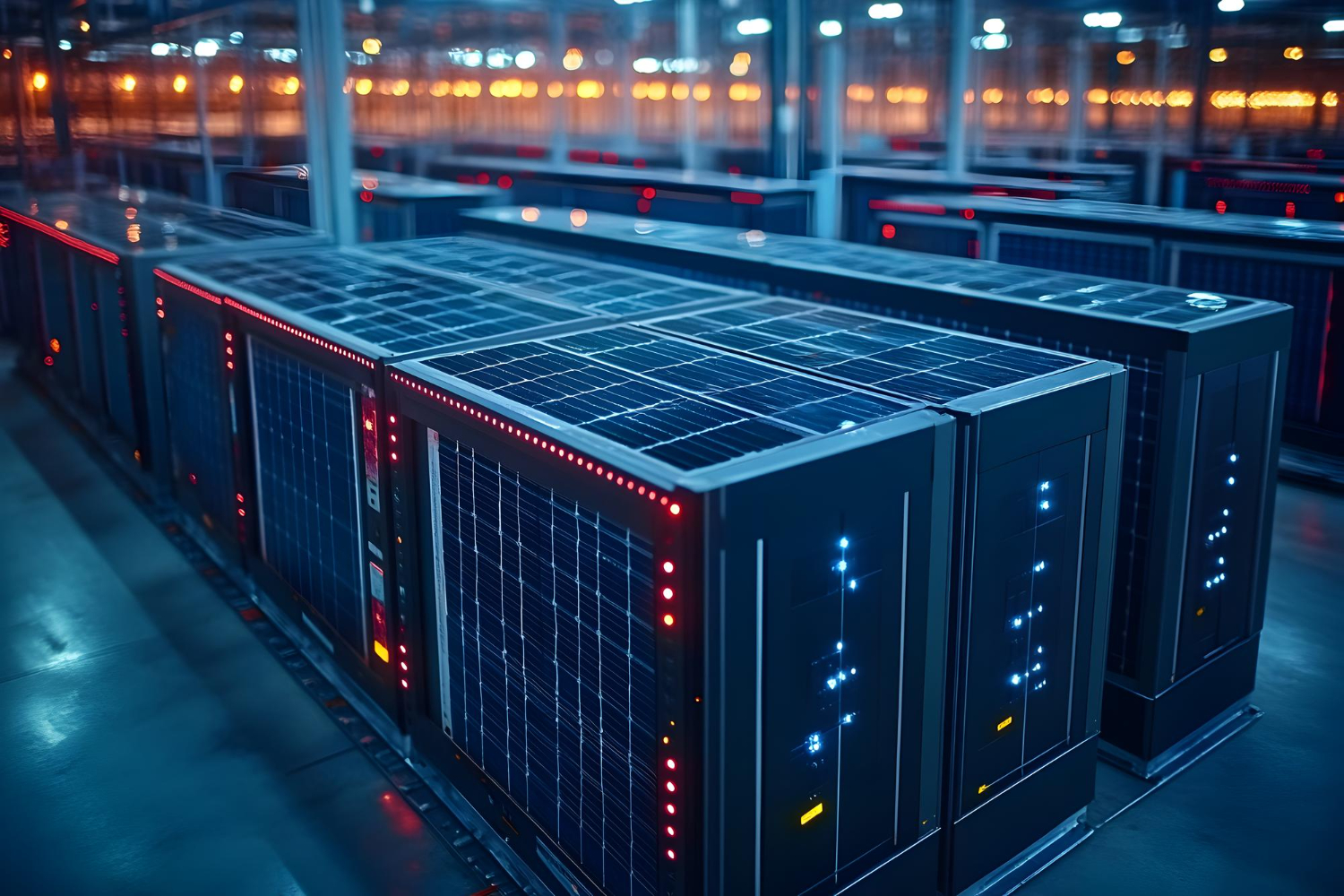
The numbers are striking. Global lithium demand jumped almost 30% in 2024 alone, driven by EV adoption and grid storage expansion. Global lithium-ion battery deployment in 2025 was six times as high as in 2020, with electric vehicles accounting for more than 70% of total lithium-ion battery use and one in every four cars sold globally being electric. Battery energy storage systems — the tanks that hold renewable electricity when the sun isn’t shining, and the wind isn’t blowing — added between 210 and 240 GWh of new capacity in 2025 alone. The scale of the bet being placed on lithium-ion chemistry is, by any historical measure, extraordinary.
And the supply chain underpinning it is not ready.
The Refining Chokepoint Nobody Talks About
Mining gets most of the headlines. Reserves, production tonnage, new deposits — these are the numbers that appear in government strategy documents and investor decks. But the actual bottleneck is not where lithium comes out of the ground. It is where lithium gets turned into the battery-grade chemicals that manufacturers actually need.
China controls more than 70% of processed energy materials production and more than 60% of energy materials purification and refinement. Australia accounts for 50% of all lithium extracted globally, of which 98% was historically exported to China for refining. By 2027, Chinese companies are expected to contribute around 32% of global lithium production from domestic projects and another 18% from overseas operations — but their dominance in refining is more pronounced still, with China expected to manage around 81% of lithium refining activities by that year.
The distinction matters enormously. A country can sit atop vast lithium reserves and still be effectively dependent on China to turn that resource into something usable. That is the position Australia, Chile, and Argentina currently find themselves in. Raw spodumene ore and lithium brine are commodities; battery-grade lithium carbonate and lithium hydroxide are strategic inputs — and the conversion between the two runs overwhelmingly through Chinese industrial infrastructure.
Beijing has also begun limiting exports of lithium-processing machines and technology, ostensibly to protect local industries and manage intellectual property. In 2025, several Chinese equipment suppliers limited shipments abroad, making it harder for competitors in the US and Europe to build their own refining systems. The effect is to preserve the high-value stage of the supply chain inside China even as mining diversifies elsewhere.
The Lithium Triangle: Riches Without Control
High in the Andes, where Argentina, Bolivia, and Chile converge across a belt of high-altitude salt flats, lies the largest concentration of lithium on Earth. Argentina, Bolivia, and Chile make up the Lithium Triangle, which holds more than half of the world’s identified lithium resources, a geography that has become a strategic battleground where states, mining firms, and outside powers compete to lock in supply chains for the energy transition.
The geopolitical contest over this territory has intensified rapidly. China has set its sights on Bolivia’s Uyuni salt flat, the largest known lithium resource in the world, while Russia has moved to take control of Bolivia’s Pastos Grandes salar. Bolivia’s Congress has been debating laws that would grant exclusive lithium exploration and production rights for decades to a Chinese consortium led by battery giant CATL and the Russian state-owned enterprise Uranium One.
Bolivia signed a $1 billion agreement with a Chinese-led consortium including CATL to build direct lithium extraction plants at Uyuni, with the state retaining a 51% stake in each project — though public outrage erupted in July 2025, when a congressional session descended into protests as lawmakers opposed deals with Chinese and Russian firms worth around $2 billion.
Chile, which holds the world’s second-largest lithium reserves, has moved toward a different model. In April 2025, President Boric unveiled a plan requiring all new lithium contracts to operate as public-private partnerships, with state mining firm Codelco preparing a joint venture with SQM and Rio Tinto joining a new project under this structure. Negotiations are also underway to include indigenous Atacameño communities in governance plans — a first in Chile’s lithium sector.
Argentina, by contrast, has maintained a more open investment environment, attracting an estimated $10 to $20 billion in lithium investment by 2029 under projections that would make it the world’s third-largest producer, with six new extraction plants under construction.
The triangle’s promise, however, comes with hard constraints. Long development timelines for new lithium projects — typically ranging from 7 to 15 years from exploration to production — limit supply elasticity and create structural constraints that cannot be quickly resolved during demand surges. And the environmental and social costs are mounting: a 2025 study detailed patterns of human rights and environmental abuses linked to lithium mining in the triangle, with the explosion in demand already damaging one of the world’s driest and most fragile ecosystems and fuelling socio-political unrest.
When Does the Shortage Arrive?
The timing question is more contested than the supply risk itself. After a period of oversupply that pushed lithium carbonate prices sharply lower in 2023 and 2024, the market has begun tightening again. Due to demand growing faster than supply in 2026, analysts see the market moving from oversupply closer to balance by the end of the year.
The IEA’s Global Critical Minerals Outlook 2025 found that demand for most battery materials will likely exceed supply after 2029–2030, with lithium shortages projected to hit markets between 2030 and 2040 without major new investments. That window — three to fourteen years from now — is tight by the standards of mineral infrastructure, where mine development cycles alone can run a decade.
Material shortages are a primary constraint on clean energy capacity expansion even before the full demand surge arrives. For the US specifically, even if materials were unlimited, additional bottlenecks exist around solar PV installation rates, labour availability, and offshore wind port capacity — meaning the lithium problem compounds an already constrained deployment pipeline.
The IEA has also flagged the broader investment gap. The lack of investment in midstream supply chains — the refining and processing layer between mine and battery — in markets outside China poses a growing risk to global supply security. Europe and the United States have announced policy frameworks — the EU’s Critical Raw Materials Act targets 40% domestic or allied sourcing of critical minerals by 2030, while the US committed a $2.23 billion loan to the Lithium Americas Thacker Pass joint venture with General Motors in September 2025 — but industry analysts note that building the processing infrastructure these policies require could take a decade.
The Sodium-Ion Wildcard
The most consequential shift in the battery landscape in 2026 is not happening in a mine or a refinery. It is happening in CATL’s factories in Fujian province.
Sodium-ion batteries have crossed from laboratory curiosity into commercial reality in 2026, with CATL and BYD ramping GWh-scale production and cost parity with LFP lithium-ion projected by 2027 — positioning sodium-ion as a strategic complement, not a wholesale replacement, for energy storage. The raw material advantage is significant: sodium carbonate costs $0.05 per kilogram compared to $15 per kilogram for lithium carbonate as of mid-2025 — a 300-fold differential.
CATL signed a 60 GWh sodium-ion supply deal in April 2026 — roughly equivalent to half of its total energy storage battery volume shipped across all of 2025 — citing this as proof of “large-scale delivery capabilities” for the technology. The company confirmed that sodium-ion batteries will begin rolling out in passenger EVs by the end of 2026.
Global sodium-ion shipments reached around 9 GWh in 2025, up 150% from the previous year. Analysts expect sodium-ion to be adopted initially in entry-level electric vehicles, cold-climate applications, and stationary energy storage — complementing rather than replacing lithium-based batteries.
The critical caveat is that sodium-ion does not escape China’s industrial dominance — it largely deepens it. CATL and BYD are the world’s leading sodium-ion producers, and CATL alone invested nearly 10 billion yuan ($1.45 billion) in sodium battery research and development since 2016, giving it a commanding head start that Western competitors are only beginning to acknowledge. The sodium-ion transition reduces lithium price exposure but does not by itself redistribute supply chain control.
The Geometry of the Problem
Taken together, the battery supply chain challenge has three distinct layers, each requiring a different solution on a different timeline.
The mining layer is diversifying, though slowly. New lithium capacity is coming online in Australia, Argentina, and the United States, and within five to ten years, raw material supply will be more geographically distributed than it is today.
The refining layer is the most acute near-term vulnerability. Building non-Chinese refining capacity at scale requires industrial policy, capital, technology access, and years of lead time — and China’s recent moves to restrict processing equipment exports are explicitly designed to extend its advantage. Chemical processing and component manufacturing — the steps that determine pricing power — remain heavily anchored in Asia, and the result is a growing bottleneck risk that mining diversification alone cannot solve.
The chemistry layer is where the next decade’s bets are being placed. Sodium-ion offers a partial hedge against lithium volatility. Solid-state batteries promise step-change improvements in energy density and safety, but remain at a pre-commercial scale. Battery recycling — closing the loop on lithium already in circulation — could meaningfully reduce primary demand, but only if collection infrastructure scales alongside EV adoption.
None of these layers resolves cleanly on the timelines governments have set for themselves. The EU’s 2035 combustion engine ban, the IEA’s net-zero pathway, the Biden and subsequent administrations’ clean energy manufacturing ambitions — all were written with an implicit assumption that supply chains would scale with demand. In 2026, the EV transition is being shaped, more quietly but more powerfully than any charging network or consumer incentive, by chemistry — and by who controls the industrial processes that turn raw minerals into the refined compounds that make batteries work.
The clean energy transition is real, and its momentum is no longer in doubt. But it is running on a supply chain that was not built for this speed, was not designed with resilience in mind, and remains, at its most critical stage, concentrated in the hands of one country. That is the bottleneck — and fixing it will take longer than most energy roadmaps currently admit.
Sources: International Energy Agency Global Critical Minerals Outlook 2025; IEA Commentary on Battery Markets and Supply Risks (2026); PatSnap Sodium-Ion Battery Technology Landscape 2026; Electrek; CarNewsChina; Nature/npj Clean Energy (2025); S&P Global Platts; OilPrice.com; Carbon Credits; Stanford University Lithium Bridge analysis; China Data Portal / USGS / Benchmark Minerals; National Interest; International Relations Review; FIDH South America Lithium Report (August 2025); Catalyst McGill; Discovery Alert.