
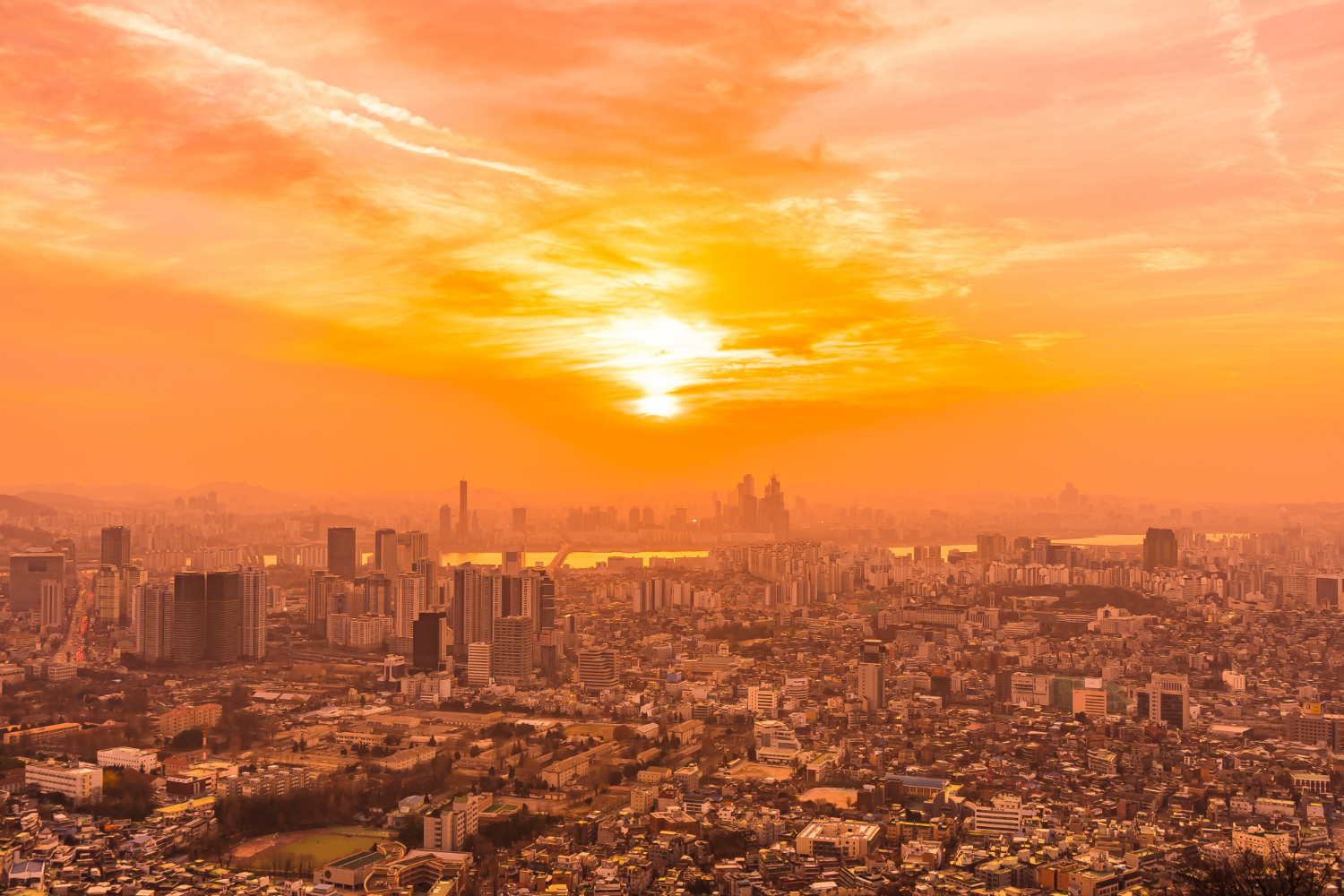
On two consecutive days in May 2025, Dubai recorded its highest temperature ever — 51.6 degrees Celsius (nearly 125°F). Both records fell before the United Arab Emirates had even activated its standard midday outdoor work ban for the season. That ban does not come into force until June 15 each year, a calendar-based rule designed around historical climate patterns. The climate is no longer following those patterns. The gap between where dangerous heat is arriving and where formal human protection begins is widening every season — and in 2026, that gap is costing lives, erasing working hours, and reshaping entire economies.
The science is now grimly precise about the boundary conditions. A wet-bulb temperature — a measure that combines heat and humidity to capture what the body actually experiences — of 35°C (95°F) is the theoretical upper limit of human survivability under sustained exposure. Beyond it, the body’s evaporative cooling mechanism fails. Even a healthy, fully hydrated adult at rest cannot prevent core temperature from rising toward fatal hyperthermia. Real-world experiments with human subjects, published in a landmark 2022 study from Penn State’s Human Environmental Age Thresholds project, found the practical danger threshold is lower still — around 31°C wet-bulb for young adults, and meaningfully lower for older or less healthy people. The theoretical number had been too optimistic by several critical degrees.
Extreme humid heat has more than doubled in frequency since 1979, and the locations registering the most dangerous conditions are not remote or uninhabited. They are where hundreds of millions of people live, farm, and build things for a living.
The Geography of the Breaking Point
Three regions now sit at the frontier of human outdoor work tolerance: the Persian Gulf, South Asia’s Indus and Ganges river valleys, and parts of sub-Saharan West Africa.
In June 2025, Human Rights Watch warned that millions of migrant construction and industrial workers across Saudi Arabia, the UAE, Qatar, and Kuwait are continuously exposed to life-threatening heat. The rights group documented that existing protections — calendar-based midday work bans, voluntary rest schedules, employer-managed shade requirements — are structurally inadequate when dangerous conditions now arrive weeks before official protection periods begin and persist overnight rather than dissipating after dark. Wet bulb temperature spikes have been documented in coastal areas of Pakistan, Bangladesh, India, and across the Persian Gulf over the past three years, with recent climate data confirming that dangerous heat and humidity combinations in the Gulf no longer dissipate after dark.
South Asia is the scale problem. The areas likely to be hardest hit — in northern India, Bangladesh, and southern Pakistan — are home to 1.5 billion people, many of them dependent on subsistence farming that requires long hours of hard outdoor labour, unprotected from the sun. From mid-April through May 2026, the pre-monsoon heat season delivered what climate scientists at World Weather Attribution confirmed was made three times more likely by human-caused climate change. The heat-induced agricultural drought is affecting over one million square kilometres, threatening the food security and livelihoods of millions dependent on farming, while coinciding with major election periods and census operations, exposing millions of voters and officials to dangerous outdoor conditions. At least 37 deaths from heat were recorded in India and 10 in Pakistan in the 2026 pre-monsoon season alone — numbers climate researchers acknowledge are vast undercounts, since heat deaths are systematically misattributed to cardiac failure and other causes in countries without comprehensive heat mortality surveillance.
Outdoor workers, daily wage earners, and those living in poor-quality or informal housing are significantly more vulnerable to heat-related illness. In some areas of Pakistan, indoor temperatures in brick and concrete buildings have been recorded exceeding 45°C. For these workers, there is no air-conditioned alternative, no remote option, no seasonal adjustment. The work either happens in the heat or it does not happen.
The Economic Arithmetic of Lost Hours
The financial cost of heat-impaired work is now large enough to register in national accounts.
Assuming a pathway toward a 1.5°C rise in global temperatures by the end of the century, the ILO projected that 2.2% of total working hours will be lost to high temperatures globally in 2030 — a productivity loss equivalent to 80 million full-time jobs, with economic costs reaching $2.4 trillion in lost GDP. Agriculture accounts for 60% of those lost hours; construction adds another 19%. Both are sectors dominated by the lowest-paid, least protected workers on earth.
In the United States, the numbers are already material. Heat-induced lost labour productivity costs the U.S. approximately $100 billion annually, with projections showing costs doubling to nearly $200 billion by 2030 and reaching $500 billion by 2050 without significant action on emissions or worker protection. Texas alone is projected to lose a cumulative $110 billion in labour productivity by 2050. Texas and Florida — which accounted for almost half of all heat-related severe injuries in the U.S. construction industry between 2015 and 2023 — have failed to adopt statewide heat standards and have banned cities and counties from passing local heat protections.
The burden falls most heavily where it can be least absorbed. The ILO estimates that low- and middle-income economies are the most affected, with the costs of injuries from excessive heat in the workplace reaching around 1.5% of national GDP in the hardest-hit countries — a toll that compounds year on year as temperatures continue to rise.
How Governments Are Responding
The regulatory response to this crisis is, like the heat itself, geographically uneven.
Japan has moved furthest, fastest. On June 1, 2025, Japan’s amended Industrial Safety and Health Act came into force, explicitly mandating measures against heatstroke as a legal obligation for companies — an obligation with criminal penalties, requiring prompt action from all employers. The regulation sets specific environmental thresholds that trigger mandatory employer action: a Wet Bulb Globe Temperature of 28°C or higher sustained for more than an hour, or an air temperature of 31°C, requires employers to implement mandatory cooling protocols, health monitoring, and work modification — with non-compliance resulting in penalties. More than 300 Japanese companies introduced heat countermeasures during the summer of 2025 following the law’s enforcement. Japan’s approach is notably scientific: it uses Wet Bulb Globe Temperature — a composite index accounting for temperature, humidity, wind speed, and solar radiation simultaneously — rather than simple air temperature, producing a far more accurate picture of actual physiological heat load.
The United States is still catching up. OSHA published a Notice of Proposed Rulemaking for Heat Injury and Illness Prevention in Outdoor and Indoor Work Settings in August 2024 — the first-ever proposed federal heat safety standard — covering all employers in general industry, construction, maritime, and agriculture sectors. Public hearings concluded in July 2025. A final rule has not yet been issued. OSHA anticipates finalising the regulation in late 2025 or early 2026, followed by a 150-day phase-in period, with the agency continuing to enforce heat safety through its existing National Emphasis Program and General Duty Clause in the interim. The absence of a final rule means that the two American states with the highest outdoor worker heat exposure — Texas and Florida — currently operate with no binding state or federal heat protection requirements for most of their outdoor workforce.
Germany and broader Europe have approached the issue through a mix of labour law and climate adaptation planning. The EU’s OSH Framework Directive requires employers to assess all workplace risks, which courts and regulators have increasingly interpreted to include heat risks as temperatures have risen. Germany’s Federal Institute for Occupational Safety and Health updated its technical rules on thermal environments in 2024 to reflect evidence that existing guidance underestimated heat stress risk, particularly for older workers and those doing moderate-to-heavy physical labour. Several German trade unions have pushed for binding outdoor work suspension rules above specific temperature thresholds — modelled partly on Japan’s WBGT approach, but no federal legislation has yet been passed.
The Gulf states present the sharpest paradox: some of the world’s most heat-exposed workers under some of the world’s least protective frameworks. Saudi Arabia, the UAE, and Qatar all operate summer midday work bans, typically running from June 15 to September 15. But these bans are calendar-based and fail to account for the reality that dangerous wet-bulb conditions now arrive weeks before June 15 and persist into late September — and that night-time temperatures in the Gulf no longer offer meaningful physiological recovery for workers in unventilated accommodation.
The New Science of Where Work Becomes Impossible
The most significant recent development in heat science is not a temperature record. It is the downward revision of what the human body can actually tolerate.
For years, 35°C wet-bulb was cited as the survivability limit — the temperature beyond which thermoregulation fails. Real-world human subject research found that the actual danger threshold is lower — around 31°C wet-bulb, or 87°F at 100% humidity — even for young, healthy subjects, with the threshold for older populations likely lower still. This revision matters enormously for where on the map outdoor work becomes physiologically unsafe: a 31°C wet-bulb threshold means that vast areas of the planet could become risky to live and work in with just 2°C of global warming — a level that could be reached as early as 2045 under current emissions trajectories.
Under the most severe warming scenarios, the implications stretch from dangerous to existential. Projections indicate that by 2100, 70% of the Indian, Pakistani, and Bangladeshi populations could be exposed to extreme wet-bulb temperatures — posing severe health risks, especially for outdoor labourers and those in agriculture. A place does not need to reach the absolute physiological limit to become functionally uninhabitable for people who work outdoors. It needs only to exceed the point at which productive, sustained physical labour is impossible — and many regions are approaching that point within the working lifetimes of people already in the labour force today.
The Regulation Gap That Is Already Killing People
The distance between where the science is and where the regulation is remains the central failure of the global response to extreme heat.
Japan’s June 2025 law represents the clearest model of what evidence-based heat protection looks like: specific, measurable thresholds; employer obligations with legal force; monitoring requirements; criminal penalties for non-compliance; and a scientific framework — WBGT — that captures actual physiological risk rather than the air temperature number that appears on a weather app. It took Japan multiple summers of worsening workplace casualties to get there. In 2024 alone, extreme temperatures were linked to nearly 30 occupational deaths and over 1,200 cases of heat-related illness in Japan, primarily in construction and manufacturing, before the legislative response came into force.
The countries and regions with the most exposed workers — South Asia, sub-Saharan Africa, the Gulf — have the least regulatory capacity to respond. That asymmetry is not accidental. It reflects the same structural inequalities that have defined the climate crisis from the beginning: those who contributed least to the warming bear the greatest cost of its consequences.
About 4 billion people worldwide experienced at least one extra month of extreme heat between May 2024 and May 2025 because of human-caused climate change. For hundreds of millions of outdoor workers, that extra month is not an abstraction. It is the difference between a working season and a survival calculation — conducted daily, in the fields and on the construction sites and in the loading bays of an economy that still requires human bodies to function in the open air.
The map of where those bodies can safely do that work is shrinking, and the regulations meant to protect them are still catching up.
Sources: Environment+Energy Leader, Gulf and South Asia Wet Bulb Limits: The EHS Gap in 2026 (May 2026); World Weather Attribution, Climate Change and South Asia Pre-Monsoon Heat 2026 (May 2026); Mongabay, Climate Change Triples Chance of Deadly 2026 South Asia Heatwave (May 2026); Penn State University, Human Environmental Age Thresholds Project; Science Advances, The Emergence of Heat and Humidity Too Severe for Human Tolerance; Perry World House / ILO, Impact of Heat Stress on Labor Productivity; Economic Policy Institute, Extreme Heat Is Deadly for Workers (August 2025); FAS, Impacts of Extreme Heat on Labor (July 2025); World Economic Forum, How Japanese Firms Are Adapting to Workplace Heat Risks (September 2025); HeatStress.com, Japan’s New Heat Safety Law (September 2025); OSHA Heat Rulemaking Docket (2024–2025); bioRxiv, Mapping Human Survivability at Extreme Wet-Bulb Temperatures (September 2025).