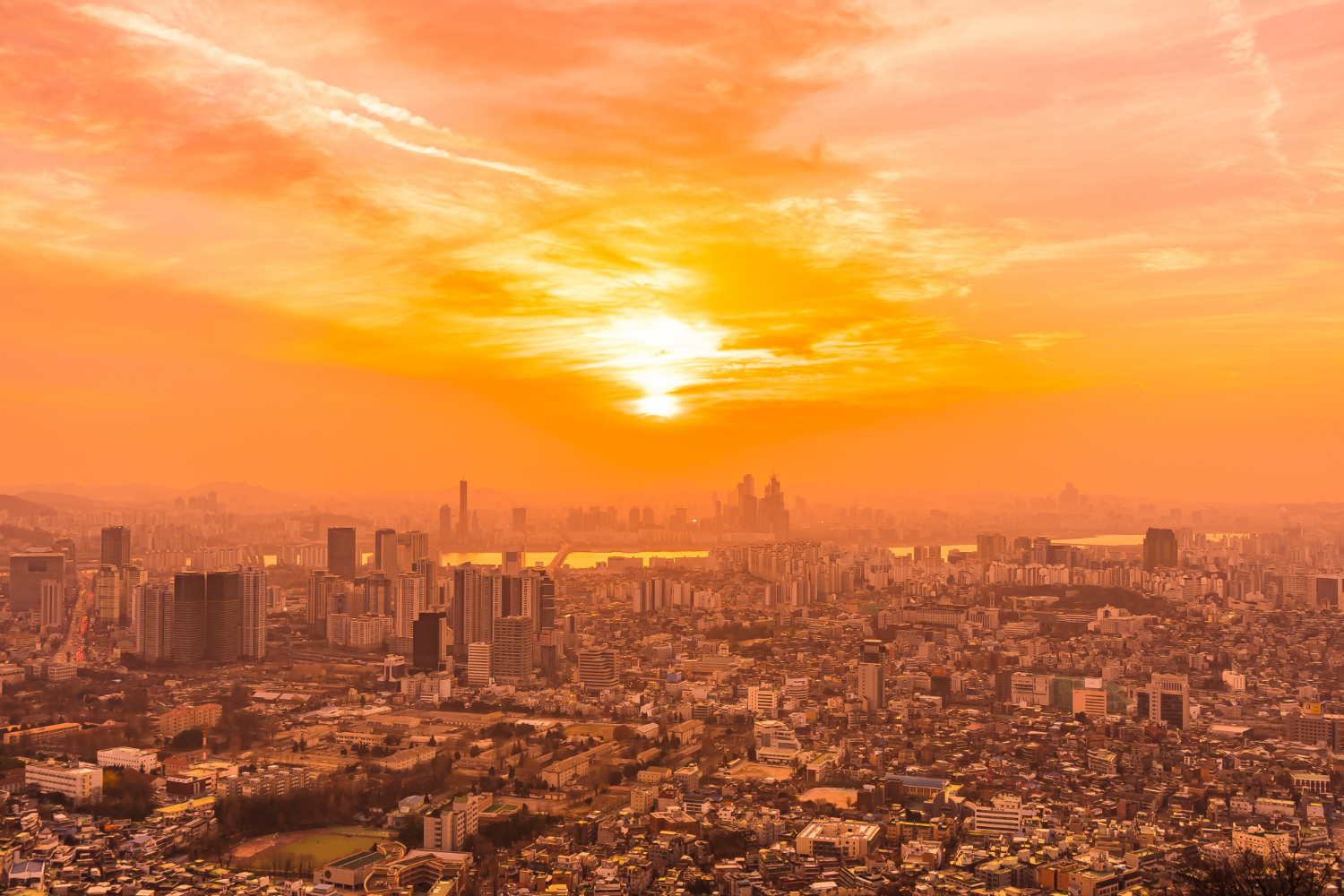
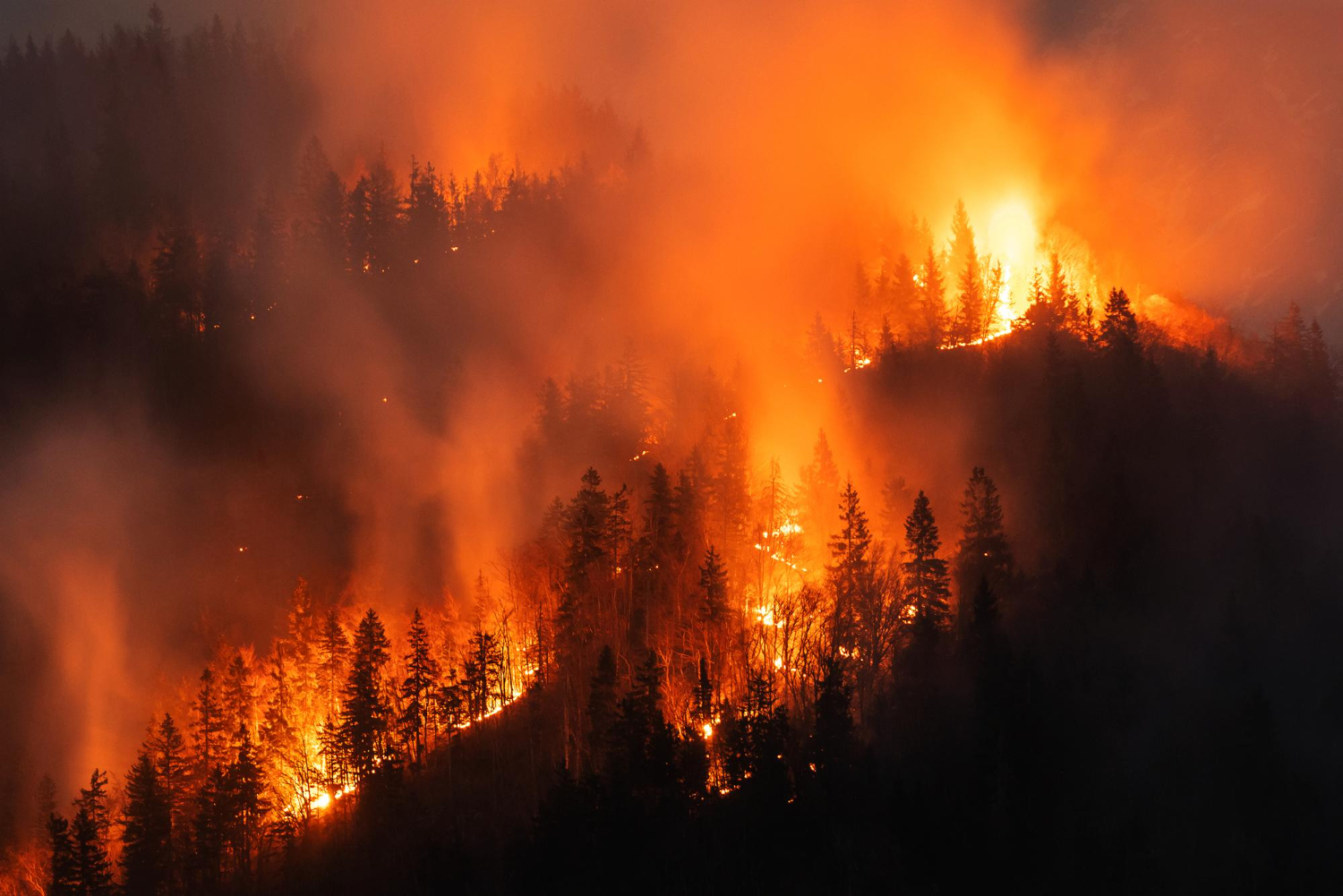
In January 2025, wildfires tore through Los Angeles during what was once the city’s wettest month of the year. The fires killed 31 people, destroyed almost 12,000 homes, forced over 150,000 evacuations, and generated estimated losses of $140 billion — ranking among the five costliest natural disasters in world history. In March 2025, South Korea recorded its largest and most destructive wildfires ever, in a month when fire used to be almost unknown there. In July 2025, Greece, Turkey, and Cyprus experienced one of the most devastating wildfire months in recent history, fuelled by a record heatwave above 45°C, drought, and strong winds.
The calendar no longer organises fire the way it once did. The concept of a “wildfire season” — a defined window of months when fire agencies prepare, respond, and then stand down — is becoming a fiction in every region where it was once reliable enough to build emergency management systems around.
The Science of a Year-Round Wildfire
The mechanism driving this shift is well understood, even if its full implications are still being absorbed. Hotter temperatures dry out vegetation faster and keep it dry longer. Drought conditions that once lasted weeks now stretch across entire years. The narrow windows of moderate humidity that historically interrupted fire-prone periods are shrinking. What used to be edge cases — January fires in Southern California, winter fires in Australia, autumn fires in Greece — are now recurring features of a warmer world.
Research from the Helmholtz Center for Environmental Research confirms that fire weather seasons in eastern Australia and western North America are increasingly overlapping, with simultaneous high-risk fire days rising by roughly one day per year since 1979 — a trend that, if it continues, could add between 4 and 29 additional days of overlapping fire weather per year by mid-century. The practical consequence is significant: for decades, emergency crews in the Northern and Southern Hemispheres shared personnel, aircraft, and expertise precisely because their peak fire seasons fell at opposite ends of the year. That scheduling logic — the breathing space created by opposite-hemisphere seasons — is rapidly disappearing.
The geographic spread of fire risk is shifting alongside the calendar. By April 10, 2026, year-to-date acreage burned in the United States stood at 1,707,778 acres — 231% of the ten-year average. In March 2026, the Morrill Fire became the largest fire in Nebraska’s recorded history. In April, two major wildfires in southern Georgia together burned more than 50,000 acres and destroyed more than 120 homes — the most lost to wildfire in Georgia’s history. These are not traditionally fire-prone regions. The risk map is being redrawn in real time.
Canada’s boreal forests illustrate how quickly a new fire regime can establish itself. 2025 was Canada’s third successive year of extreme wildfire, and the total CO2 emissions from its forests during 2023–2025 exceeded the combined emissions of the preceding 15 years — a figure that reflects both the intensifying conditions and the carbon-rich nature of the ecosystems now burning.
Southern Europe: Burning Longer, Dying Faster
Southern Europe’s wildfire problem has evolved from a seasonal nuisance into a structural emergency. As of mid-August 2025, 1,628 fires had been detected across the European Union, burning 439,568 hectares — more than twice the 188,643 hectares burned at the same point in 2024. Portugal’s forests were burning at a rate 17 times higher than in 2024, while Spain battled 20 major active wildfires simultaneously, resulting in multiple deaths.
The season’s extension into autumn is becoming a consistent pattern. Drought conditions that once characterised July and August in Iberia now routinely carry into October and November, giving fire a longer window to establish and spread through vegetation that doesn’t recover enough moisture between events. What European fire managers once called the “fire season” ran roughly from June through August. In parts of Portugal, Spain, and Greece, it now runs from April through November — and even winter fires are no longer without precedent.
The policy response across Southern Europe remains fragmented. Greece introduced a mandatory firebreak and land clearing system after its 2021 Mati disaster — a change made under duress and still imperfectly implemented. Italy and Spain have invested in aerial firefighting capacity but have been slower to address the underlying fuel load accumulation that decades of rural abandonment have produced. As young populations leave fire-prone rural areas, the traditional human management of those landscapes — grazing, small-scale burning, brush clearing — disappears with them, leaving behind vegetation conditions ideal for extreme fire behaviour when drought and heat arrive.
Australia: The Country That Learned the Hard Way
Australia’s relationship with catastrophic fire is older and more institutionalised than any of its peer nations, but the 2019–2020 Black Summer —which burned over 12 million hectares, an area larger than England — forced a reckoning with how inadequate even its advanced systems had become.
In 2025, Australia maintained heightened fire risk well outside its traditional summer peak, with above-normal conditions persisting in southern coastal South Australia and portions of Victoria even during winter, driven by drought. Bushfires burned tens of thousands of hectares in Western Victoria and New South Wales during January, and fires near Darwin and the Northern Territory burned over 2,250 km² through August — months that once offered genuine respite.
Australia’s policy response has diverged meaningfully from Europe’s reactive posture. The country’s federal and state agencies have invested heavily in prescribed burning programmes — the deliberate, controlled burning of fuel loads before they accumulate to dangerous levels — and in integrating Indigenous land management practices that maintained fire-adapted landscapes for tens of thousands of years before European settlement disrupted them. The tension between prescribed burning advocates and conservation interests remains live, but governance processes that allow dialogue about risk and trade-offs, and distribute responsibility across multiple actors rather than concentrating it in a single agency, have produced more adaptive outcomes than top-down mandates in the Australian context.
North America: A Policy Divergence in Real Time
The United States is currently running a natural experiment in wildfire governance, with the federal government and California pulling in visibly different directions after the January 2025 Los Angeles disaster.
At the federal level, the Trump administration’s approach has prioritised forest management — reducing fuel loads through logging and prescribed burns — under executive orders directing enhanced timber production and empowering agencies to expand controlled burning. In October 2025, the EPA issued policy guidance directing regional offices to remove barriers to prescribed fires in State Implementation Plans, and is completing rulemaking expected to formalise these changes in 2026. The FY2026 budget also proposes establishing a new US Wildland Fire Service within the Department of the Interior to consolidate federal wildfire functions under a single agency for the first time.
The contradiction is that federal land management has simultaneously contracted. NPR reporting shows the Trump administration treated nearly 1.5 million fewer acres for wildfire prevention in 2025 than the final year of the Biden administration, including a near-50% drop in prescribed burns — a reduction that sits in direct tension with the administration’s stated emphasis on fuel management.
California has moved independently and aggressively. Following Governor Newsom’s March 2025 emergency proclamation, state agencies fast-tracked more than 400 wildfire prevention projects across nearly 100,000 acres. In June 2026, California released a draft five-year Wildfire and Landscape Resilience Action Plan for 2026–2031, and in March 2026, it launched the state’s first-ever Tribal Stewardship Policy, setting a goal of expanding Indigenous stewardship over at least 7.5 million acres of land and coastal waters. California has also moved on the insurance side: legislation effective January 2026 requires insurers to pay 60% of contents coverage to total-loss survivors without requiring itemised inventories, and prohibits non-renewals for commercial policies for one year following a declared disaster — reforms driven directly by the collapse of private insurance markets in fire-prone areas.
What Communities Are Actually Learning About Wildfire
Across all three regions, the communities adapting most effectively share a set of common lessons that run against the instincts of emergency management systems built around response rather than prevention.
Fuel management works, but requires decades of commitment
The prescribed burning and forest thinning programmes with the clearest evidence behind them — Australia’s state fire agencies, Indigenous cultural burning programmes in both Australia and California, forest management regimes in parts of Scandinavia — are not short-cycle interventions. They require consistent multi-year budgets, trained workforces, and the political will to operate even in years when fires are quiet and the urgency is harder to sustain.
The wildland-urban interface is where policy most often fails
Peak wildfire conditions in the western US now routinely span from late spring through October, while central plains and southeastern states, once considered lower-risk, are experiencing fire events well outside historical norms. Zoning, building codes, and insurance frameworks designed for the old risk map are inadequate for the new one. Colorado’s adoption of a statewide Wildfire Resiliency Code in July 2025 — establishing minimum standards for structure hardening and defensible space in the wildland-urban interface — represents the direction most exposed jurisdictions will eventually have to follow.
Cross-border firefighting cooperation is approaching a structural limit
The growing overlap between Australian and North American fire seasons, projected to deepen by 4 to 29 additional days annually by mid-century, directly threatens the mutual aid agreements that have let both regions punch above their weight in extreme fire years. Building domestic response capacity rather than relying on international personnel swaps is no longer optional planning — it is an operational necessity.
The fire calendar has changed. The question now is how quickly governance systems can change with it.
Sources: Nature Reviews Earth & Environment, “Wildfires in 2025” (2026); Helmholtz Center for Environmental Research / Earth’s Future (2025); World Weather Attribution; National Interagency Fire Center (NIFC), July 2026 Outlook; California Governor’s Office; DLA Piper, “2026 Wildfire Trends”; Wildfire Companies Association (WFCA); US EPA; Ecology & Society; American Lung Association; Clarity.io; Breathjournal.com.