At an industry event in Hamburg in late April 2026, Armin Papperger, the chief executive of German defence giant Rheinmetall, made a claim that would have seemed implausible four years ago. Germany can now produce more ammunition than the United States, he told reporters, as a massive rearmament campaign gets underway in Europe. (Source: Newsweek)
The assertion landed with immediate geopolitical weight. For decades, the United States was the unquestioned industrial backbone of NATO’s ammunition supply. Germany, by contrast, was repeatedly criticised for underinvesting in its own defence. That dynamic has now reversed. Germany’s approach has been characterised by a degree of industrial coherence that contrasts with the more fragmented American system. Berlin’s policy shift following Russia’s full-scale invasion in 2022 (often referred to as the “Zeitenwende”), unlocked substantial state financing and political support for rearmament.
One caveat is worth stating upfront: the claims about surpassing US capacity are Papperger’s own and have not been independently verified! What is independently verifiable is the production data and those numbers tell a striking story of industrial transformation.
The Production Numbers: What Rheinmetall Has Actually Built
The scale of Germany’s ammunition production expansion is documented in Rheinmetall’s own figures, reported by Süddeutsche Zeitung and confirmed across multiple news organisations.
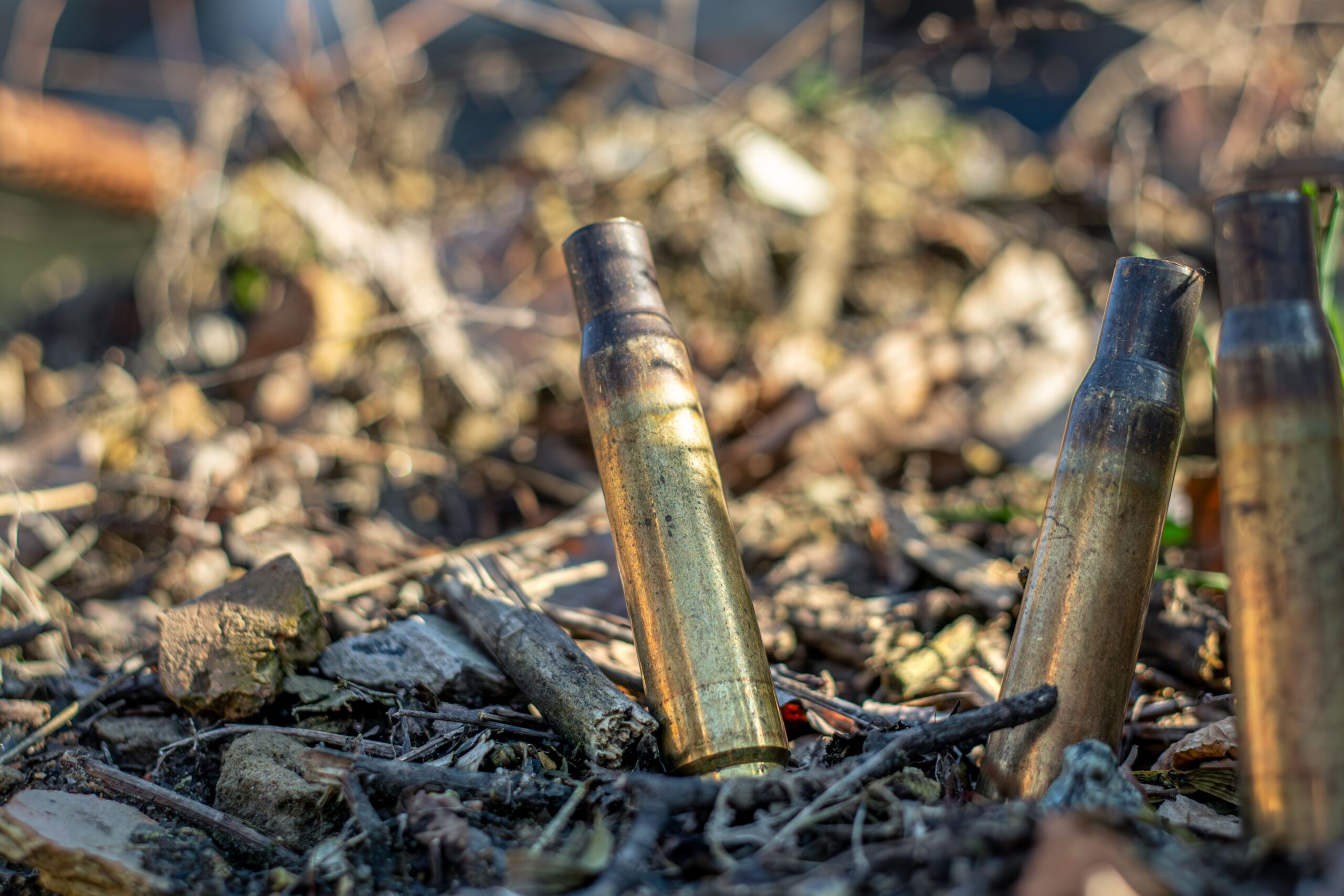
Rheinmetall had increased artillery shell output from around 70,000 rounds annually to 1.1 million, while medium-calibre ammunition production had risen from 800,000 to 4 million rounds per year. Military truck production had grown from 600 to 4,500 units annually. (Source: Hungarian Conservative)
The physical infrastructure behind those numbers is equally significant. Central to the production surge is the Unterlüß facility in Lower Saxony, which opened in August 2025 and is intended to produce up to 350,000 artillery shells annually at full capacity, making it one of the largest ammunition plants in Europe. The plant went from a muddy field to an operational munitions factory in 15 months, a timeline that defence analysts have noted is exceptional by Western standards. (Source: Rheinmetall)
The expansion extends well beyond Germany’s borders. Rheinmetall has also established new facilities in Hungary, Romania, Lithuania and Ukraine, and acquired Spanish manufacturer Expal Munitions as part of an aggressive continental expansion.
For context on where the US currently stands: according to experts, the United States has reached a production level of approximately 500,000 155mm shells per year, a figure that, compared to Rheinmetall’s reported 1.1 million artillery rounds annually, supports Papperger’s claim directionally, even if independent verification of the broader capacity comparison remains outstanding.
The financial trajectory reinforces the industrial picture. Papperger has said he does not expect the sharp rise in sales and orders to slow before 2034 at the earliest, with the company projecting turnover of €14 to €15 billion in 2026, representing growth of around 40%. (Source: UK Defence Journal) Rheinmetall’s revenues have risen by over 50% in the last five years, from over €6 billion in 2019 to almost €10 billion in 2025, driving its share price up over 1,700% in the same time period. (Source: Yelza)
The Spending Shift: Germany’s Defence Budget in Context
The production surge did not happen in isolation. It is the direct output of a sustained political and financial commitment that began in 2022 and has accelerated every year since.
Germany was the largest military spender among European NATO members in 2025, with its expenditure growing by 24 % year-on-year to $114 billion. Germany’s military burden exceeded the 2.0 % threshold for the first time since 1990, reaching 2.3 % of GDP in 2025. Berlin has since pledged to reach 3.5% of GDP by 2029. (Source: SIPRI)
The broader European context amplifies the significance. The 29 European NATO members spent a combined total of $559 billion in 2025, and 22 of them had military spending of at least 2.0 % of GDP. This is the fastest annual increase in Central and Western Europe since the end of the Cold War. (Source: SIPRI)
The contrast with the United States is stark. While the United States remained the world’s largest defense spender at $954 billion, its total marked a 7.5% drop from 2024, the largest single-year decline in decades. That divergence (European spending rising sharply as American spending falls) is the structural context in which Germany’s ammunition milestone must be understood.
How Germany Got Here: The Four-Year Transformation
The speed of Germany’s defence industrial transformation is as notable as its scale.
As recently as 2021, Germany was widely regarded as NATO’s most prominent defence spending laggard, a country that had repeatedly failed to meet the alliance’s 2% GDP target and which U.S. officials including President Trump had singled out for public criticism. That reputation was dismantled with unusual speed after February 2022.
Berlin approved a €100 billion special defence fund for the Bundeswehr, launched major procurement programmes, expanded ammunition stockpiles, and increased long-term defence spending. (Source: Reuters) Germany also became one of Ukraine’s largest military supporters, while accelerating investments in air defence, logistics, armour and artillery systems, particularly after Donald Trump returned to the White House in 2025.
The private sector responded to the political and funding signals at scale. Manufacturers opened new factories and converted existing ones. Rheinmetall (already Germany’s largest arms manufacturer) moved fastest and furthest, building the Unterlüß plant in Lower Saxony, establishing facilities across multiple European countries, and acquiring Expal Munitions to extend its continental reach. SIPRI data indicate that Germany has also significantly increased its arms exports, overtaking China to become the fourth-largest exporter of weapons in the world. (Source: SIPRI)
Three Implications for Europe
1. A Concrete Step Toward Strategic Autonomy
Germany’s production milestone is the most tangible evidence yet that European defence self-sufficiency (a concept that has been debated at summits for years) is becoming an industrial reality. The expansion of Rheinmetall’s facilities across Hungary, Romania, Lithuania and Ukraine means that the production network is geographically distributed across the continent, reducing single-point vulnerabilities and building resilience into NATO’s ammunition supply chain.
2. A Workforce Challenge That Could Limit Growth
The expansion faces a structural constraint that production figures alone do not capture. According to IBISWorld, Germany’s weapons and ammunition production industry currently employs approximately 13,761 workers. (Source: IBISWorld) A Kearney analysis from March 2025 warns that if European defence spending were to increase significantly (to 3% of GDP or beyond), up to 760,000 additional skilled workers could be needed across the continent. That gap, between current workforce and projected need, is one of the most significant constraints on whether the production ramp-up can be sustained over the coming decade.
3. Russia’s Production Still Leads
The milestone comes with an important geopolitical caveat. Despite the large funds now and previously allocated, Russian ammunition production outpaces German and also European and NATO rates. Germany’s lead over the United States in production capacity does not translate into parity with Russia, the country whose war in Ukraine has driven the entire rearmament cycle. The gap between NATO’s collective output and Russia’s wartime production rate remains a live strategic concern for alliance planners.
An Industrial Shift With Wider Economic Consequences
The implications of Germany’s defence industrial expansion extend beyond military capacity. Papperger predicted that defence production could replace around a third of jobs in Germany’s automotive industry, which is currently facing significant cuts, noting that 4,500 of the company’s 11,500 German suppliers also work with car manufacturers.
That observation points to a broader structural shift in the German economy: as the automotive sector contracts under the pressure of the electric vehicle transition and global competition, defence manufacturing is emerging as a significant source of industrial employment and export revenue. Whether that transition proves durable will depend in part on whether the political conditions that have driven rearmament remain in place over the medium term.
Conclusion: A Milestone With Caveats
Germany’s overtaking of the United States in conventional ammunition production capacity, as claimed by Rheinmetall’s CEO and consistent with publicly reported production data, represents a genuine structural shift in European defence industry. Four years ago, it would not have been considered possible. Today, it is the reported reality.
The caveats are real. The claim has not been independently verified by a third party. Russia’s production capacity still leads NATO’s. The workforce needed to sustain the expansion at scale does not yet exist. And the political conditions that have driven the rearmament cycle, like the war in Ukraine, remain unresolved.
Against this backdrop, NATO countries pledged in June 2025 to spend 5 percent of their gross domestic product on their militaries and related infrastructure costs each year within the next decade. As that target takes shape, Germany’s industrial trajectory will be one of the key variables in determining whether European security becomes structurally self-sustaining or whether the current production surge is a response to a specific crisis rather than the foundation of a lasting shift.